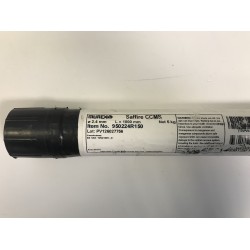
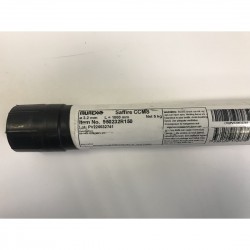
Murex is one of the great names of British welding! It’s a brand that has been putting welding rods in UK welders' hands for the best part of a century, and whose electrodes helped build some of the most famous ships ever launched from British yards. Today Murex consumables are made and supplied as part of the ESAB family, and they remain a fixture in fabrication shops, colleges and toolboxes across the country.
The Murex Story: From Essex Foundry to National Institution
Murex began in 1909 in Rainham, Essex, as an iron founder and ferroalloy maker. It discovered that much of its trade was in the powdered metal alloys that went into welding electrode coatings, so it did the logical thing: it bought its way into electrode making itself, acquiring Alloy Welding Processes Ltd. In 1931and the merged operation was trading as Murex Welding Processes from Waltham Cross in Hertfordshire.
Through the 1930s the Waltham Cross factory turned out electrodes in enormous quantities, and Murex rods and equipment went into ships including HMS Ark Royal and, decades later, the QE2. For generations of British welders, Murex wasn't a brand so much as the default: the rods you trained on, the rods in the stores, the rods that built everything from warships to farm gates.
In 1967 Murex was acquired by BOC, who concentrated their UK electrode production at Waltham Cross, and the brand later passed to ESAB, the Swedish-founded giant of the welding world. Far from retiring the name, ESAB kept it alive: ESAB Group (UK) Ltd still operates from Waltham Cross today and supplies both the ESAB and Murex brands across the UK and Ireland. Not many consumables brands can claim an unbroken line from Edwardian Essex to the present day.
What Murex Means Today
Under ESAB's ownership, Murex is the consumables heritage marque of the UK range, best known for its manual metal arc (stick) electrodes, and it still covers the rods that do the everyday work of British fabrication. The general-purpose E6013 rutile electrodes are the all-positional mild steel rods generations of welders trained on; Fortrex 7018 is the low-hydrogen basic electrode for structural and higher-strength work where weld integrity is specified; and the copper-coated mild steel TIG filler rods carry the name into TIG work. All are produced to modern certifications through ESAB's manufacturing network, with the reputation that made the name.
Murex at Weldtech
We stock Murex MMA electrodes in single packs and trade cartons, plus TIG filler, alongside the full ESAB range, and for plenty of our trade customers the choice is simple: the rod their shop has always run. As a rule of thumb, reach for the E6013 for general mild steel fabrication and repair in any position, and step up to Fortrex 7018 where the job calls for low-hydrogen strength: structural steel, thicker sections, or anything an inspector will look at. If you're unsure which electrode suits your work, ask us; matching the rod to the job is what we're here for.
Browse our Murex range below · See the full ESAB story
Frequently Asked Questions About Murex Products and Brand
Are Murex welding rods still made as a distinct product line?
Yes. Murex is owned by ESAB and the Murex range of products is supplied through ESAB Group (UK) Ltd, which operates from Waltham Cross in Hertfordshire, the same town where Murex electrodes were originally manufactured in the 1930s. The brand continues as part of ESAB's UK consumables range.
Who owns Murex welding products?
ESAB, the global welding and cutting group founded in Sweden in 1904. Murex sits alongside more than 40 brands in the ESAB family, including Victor, Tweco and the UK's Swift-Cut.
Are Murex electrodes any good?
They've welded Royal Navy aircraft carriers and the greatest ocean liners, and they're still specified by UK fabricators who could buy any welding rod they fancy. The general-purpose E6013 rods have a decades-long reputation for forgiving, all-positional running, which is why Murex remains a training-centre staple, and Fortrex 7018 carries the name into low-hydrogen structural work.
What's the difference between a Murex E6013 and a Fortrex 7018?
The E6013 is a rutile general-purpose rod: easy striking, smooth running in all positions, ideal for mild steel fabrication and repair. Fortrex 7018 is a basic, low-hydrogen electrode: a stronger, tougher weld deposit for structural steel and thicker sections, at the cost of needing cleaner technique and dry storage. If the job is general workshop welding, take the E6013; if it's specified structural work, the 7018.
What's the difference between Murex and ESAB electrodes?
They come from the same company, so it's heritage and habit more than chemistry. Murex is the historic UK naming; ESAB's OK range is the international equivalent. Many rods have a near-identical counterpart across the two catalogues, so if your usual Murex rod is out of stock, ask us for the ESAB equivalent.